The most famous eyewitness account of the Vikings comes not from the North, but from Baghdad. In 921 the Caliph sent the scholar Ahmad ibn Fadlan to the Volga – and there he met a people he calls the Rus. What he described is drastic, fascinating, and hotly debated to this day.
Ibn Fadlan was the secretary and legal scholar of an embassy that Caliph al-Muqtadir sent to the Volga Bulgars in 921/922 – officially to instruct them in the faith, but in truth also over money and a fortress against the Khazars. A journey of around 4,000 km. At the trading place on the Volga he met the Rus: merchants who came upriver in their ships.
Of their appearance he writes almost admiringly: tall “like date palms,” blond and ruddy-cheeked, marked from fingertips to neck with dark patterns and figures (tattoos or paint – the text leaves it open). Every man always carried an axe, sword and knife. The women wore oval tortoise brooches of metal – the more valuable, the richer the man – and necklaces of green glass beads, their favourite ornament.
He found their hygiene less flattering: he calls them “the filthiest of God’s creatures” and describes with disgust how each morning they all washed in turn from the same basin of water. Before wooden idol-poles they prayed for good trade and sacrificed animals.
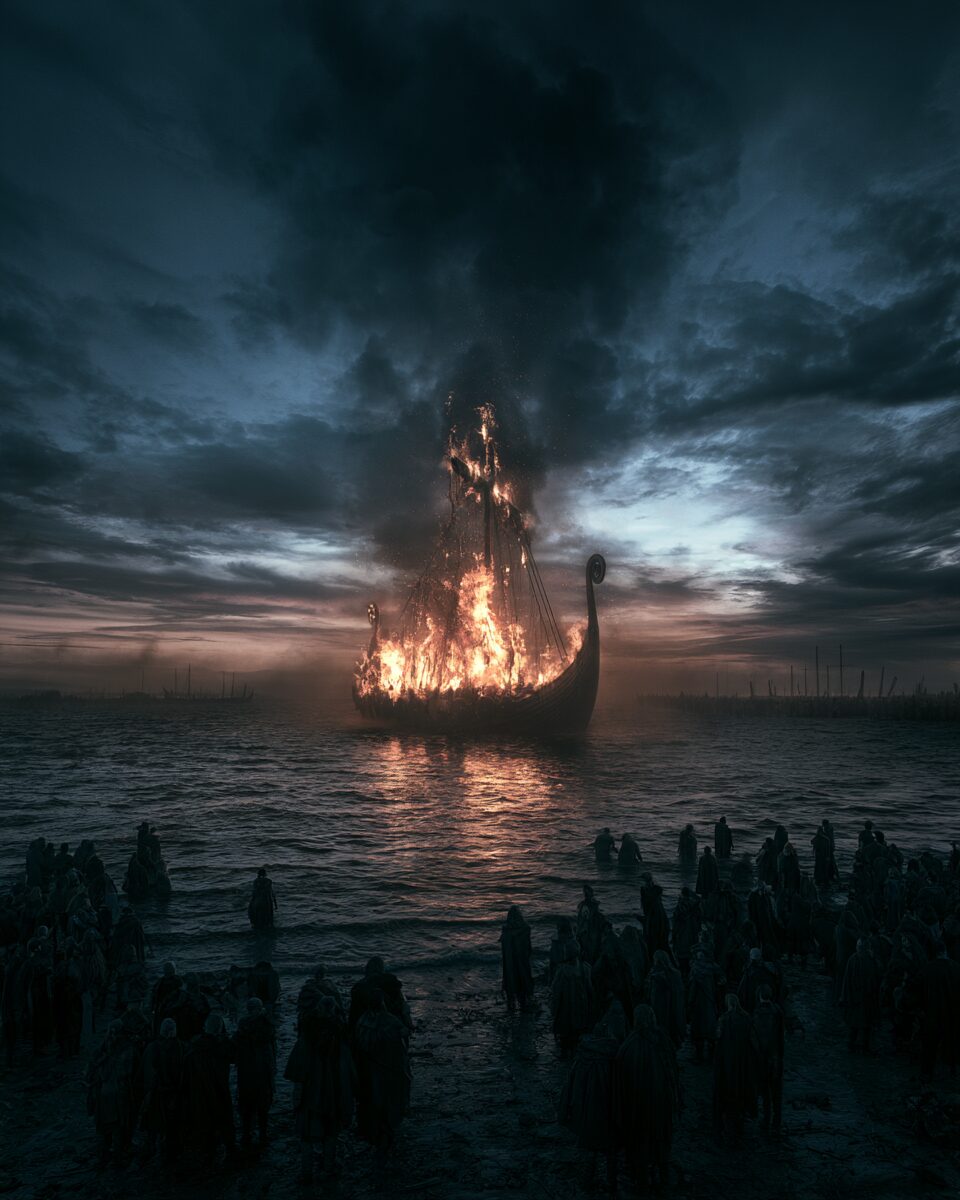
The most famous part is the funeral of a noble Rus. For ten days the dead man was laid out while garments were sewn and people drank. A slave girl volunteered to die with him. An old woman, called the “Angel of Death,” led the ritual. At the end the girl was lifted over a door frame and, according to the account, looked into the beyond: “I see my master sitting in paradise, and paradise is beautiful and green … he calls me.” Then she was killed in the tent on the ship – and the whole ship was burned together with the dead. Over the ashes they raised a mound with a birch post into which they carved the dead man’s name.
One of the Rus explained the meaning to the interpreter (in essence): “You Arabs are fools – you lay your dearest in the earth, where worms devour them. We burn them in an instant, so that they enter paradise at once.”
More on the eastern Vikings and their kin in our overview East Slavs & the Rus.