
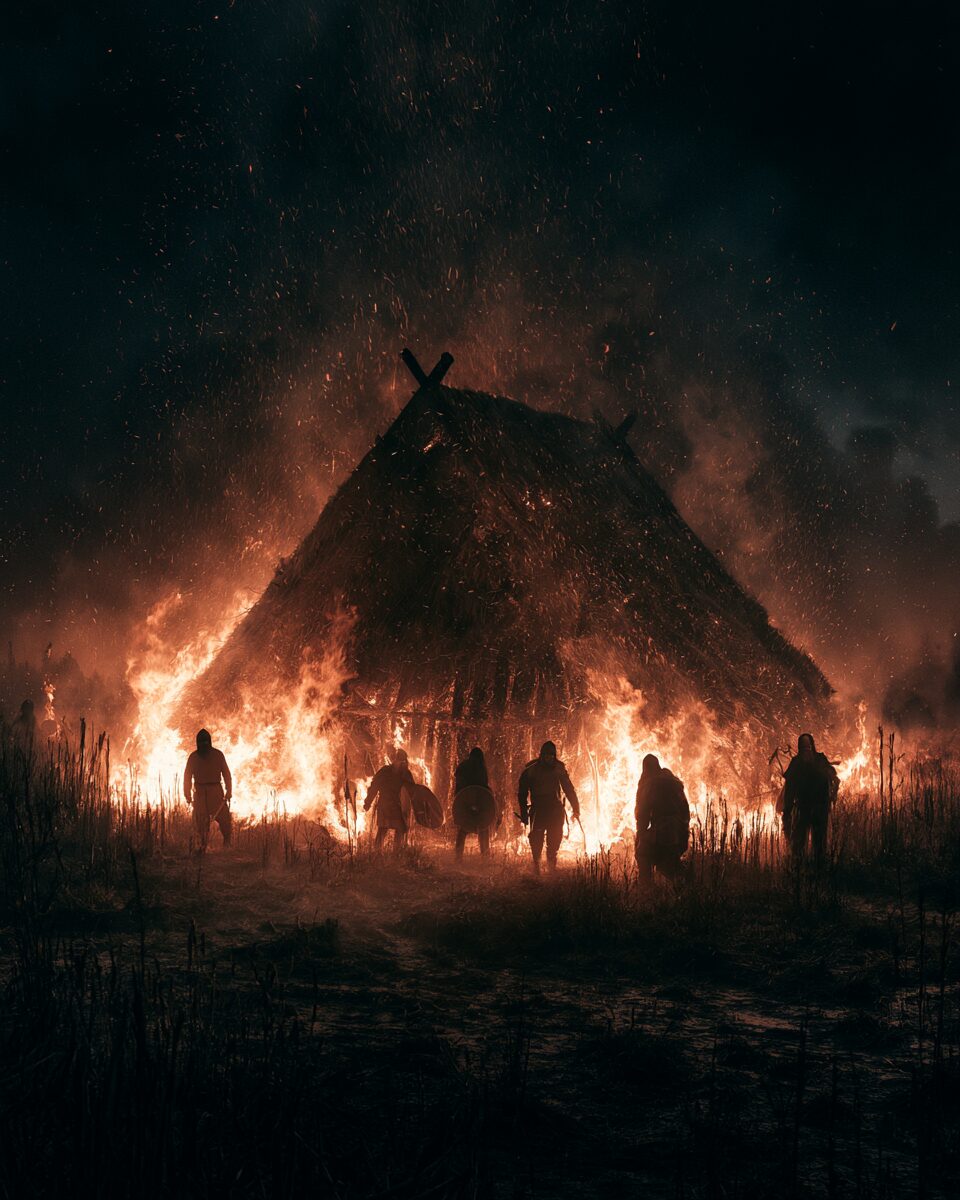
Vikings and Aachen? Sounds like two worlds with nothing to do with one another. Yet in the winter of 881/882 the Northmen really did stand before – and inside – the imperial city of Charlemagne. For us here in Alsdorf this is no distant northern fairy tale, but regional history almost on our doorstep.
The background: in 878 King Alfred the Great had defeated the Great Heathen Army at Edington in England. Scattered Viking bands crossed over to the mainland. When the West Frankish king Louis III also beat them at Saucourt on 3 August 881, they turned eastward – straight into the Carolingian heartland on the Rhine. And it lay almost defenceless: Emperor Charles III (“the Fat”) was in Italy.
Two Danish leaders, Godfrid and Sigfred, pitched their winter camp at Elsloo on the Meuse and raided from there. In December 881 they went up the Rhine: Cologne, Bonn, Neuss, Jülich, Zülpich, Andernach – names everyone in the region knows today. Along the old Roman roads they swung west from Zülpich, heading straight for Aachen.
In the imperial city they desecrated the Church of St Mary – today the Palatine Chapel of Aachen Cathedral – defiled the tomb of Charlemagne and set the imperial palace ablaze. The chapel was so badly damaged that it was not restored until 983. Afterwards they plundered Kornelimünster south of Aachen and the Eifel monasteries of Stavelot and Malmedy.
On 6 January 882 around 300 Vikings attacked the great Eifel abbey of Prüm – after Aachen the cultural heart of the empire. The monk and later abbot Regino of Prüm, an eyewitness, writes that the attackers cut down the Franks “as if unreasoning cattle and not men were being slaughtered.” Only about a tenth of the manuscripts were saved. They moved on along the Moselle: on Maundy Thursday 882 Trier fell, and at Easter it was plundered.
What remains? The North once stood literally before the gates of Aachen – through Jülich, Zülpich, the Eifel, past Cologne and Bonn. It is precisely this piece of forgotten home that our Norse engravings carry within them: no pathos, but respect for a history that really happened here.
More background in the big overview Germanic tribes, Celts & Slavs.