Valhalla was only one of many realms of the dead. The ideas of the afterlife were as varied as the burial customs themselves.
For the Vikings, death was not a mere end but a passage. This is shown by the care with which they buried their dead – and by the wealth of ideas about the afterlife.
Contrary to common belief, not every path led to Valhalla. Half of the fallen were received by Freyja; those who died of illness or old age came to Hel in the realm of the same name; the drowned fell to the sea goddess Rán. Alongside this, people kept alive the idea that the dead lived on in the burial mound and watched over farm and kin.
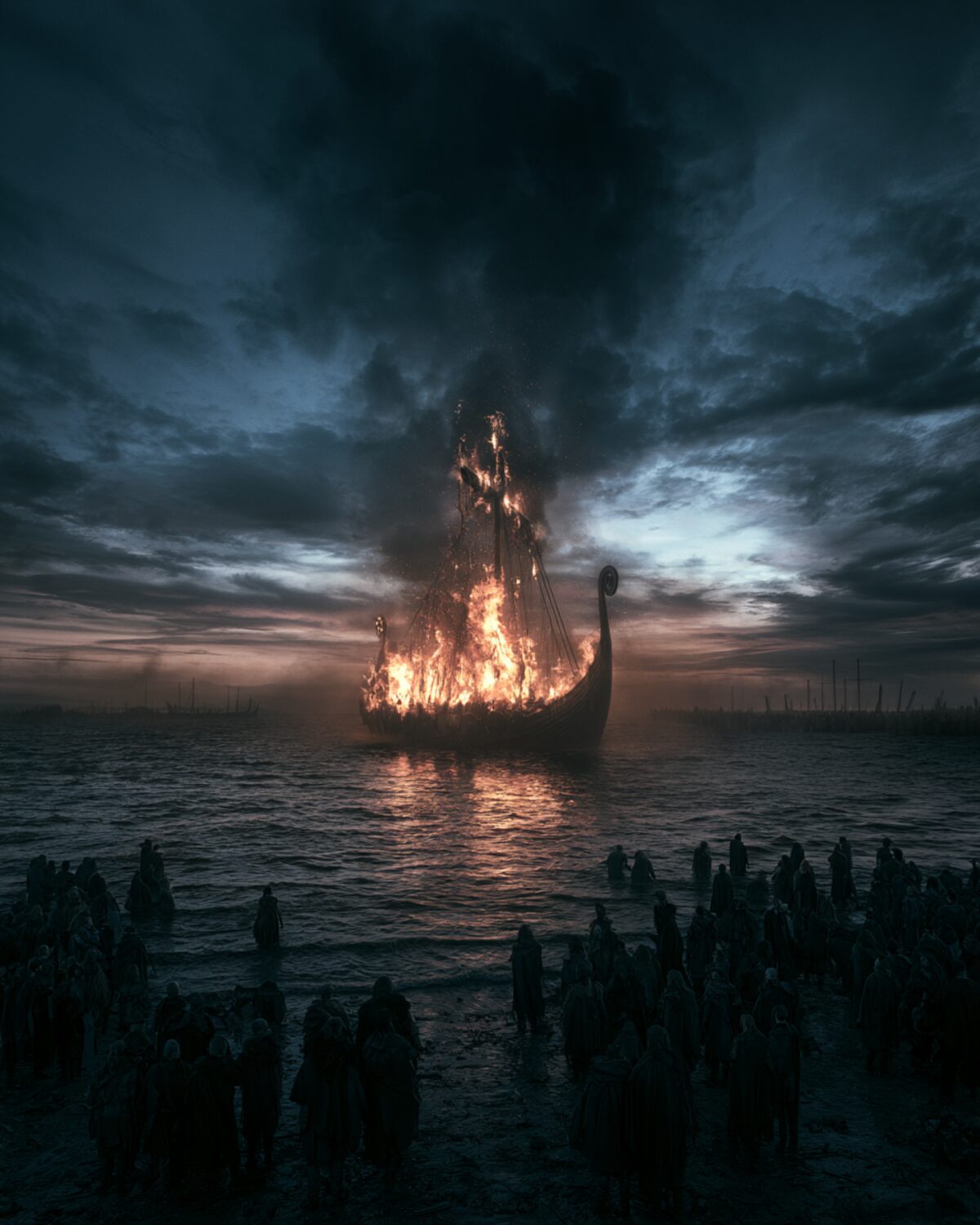
The most impressive burial was the ship grave: the powerful were laid to rest in a whole ship, equipped with weapons, jewellery, provisions, animals – sometimes in a burial mound, sometimes cremated. The ship was to carry the dead into the afterlife. The finds from Oseberg and Gokstad belong here.
Cremation was also common: the dead were burned with their grave goods, the remains laid to rest in a mound or urn field. The grave goods show that people wished the dead a good living in the afterlife – and that status counted even beyond death.
“Cattle die, and kinsmen die, and so one dies oneself; but a noble name will never die.”Hávamál 76, translation after Henry Adams Bellows (public domain)