
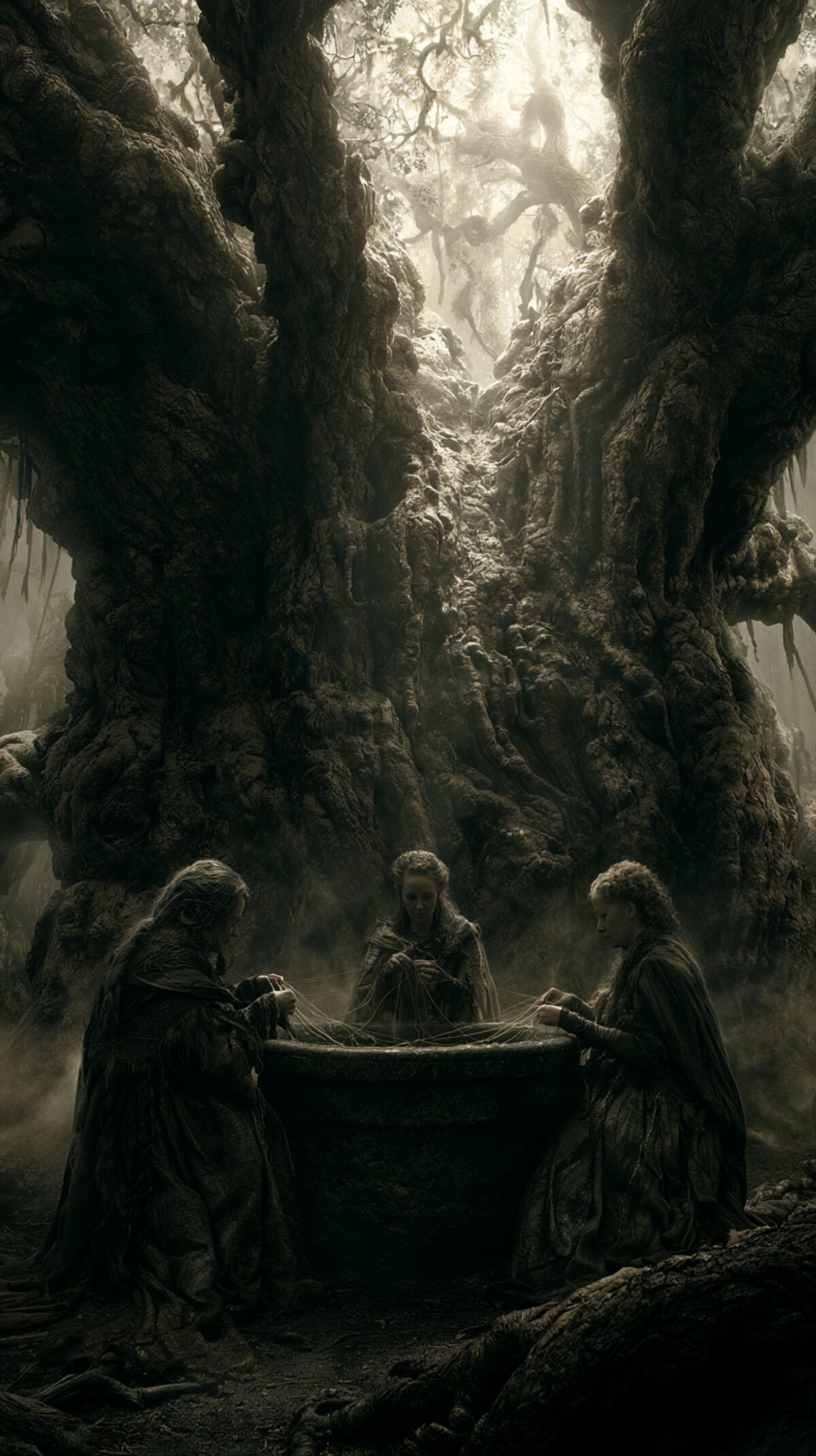
Through the long winters of Iceland's farmsteads ran a fear that had nothing to do with trolls or giants and everything to do with the neighbour next door: the dread that someone was secretly skimming off your prosperity. The tilberi is the darkest figure of that dread – a creature made by a woman to steal other people's milk and make the theft appear at home as an inexplicable wealth of butter.
The name “tilberi” means roughly “carrier” or “fetcher,” named for its single task: it carries stolen yield home. In the south and west of Iceland it was also called snakkur, “spindle,” a word from the world of wool-work that already hints at how deeply this creature was woven into the daily life of self-sufficient farmers. The tilberi sucks milk from the udders of other people's cows and sheep, sometimes steals wool as well, and whatever it brings home turns into an abundance in its owner's house that no one can account for.
It is a story about envy – about the quiet question of why one farm's churn overflows while another goes hungry. In a world where a single good milk cow could decide life or death through the winter, the suspicion that a neighbour was secretly taking from your livestock was no small matter. The tilberi gave that fear a face and a name.
Unlike many figures of Norse tradition, the tilberi is explicitly bound to women: only women could make and own one. This is striking, because in the Icelandic witch trials of the seventeenth century it was overwhelmingly men who were condemned and burned. The tilberi forms an exception to that picture – it belongs entirely to the world of women, to the sphere of the dairy, the spindle and the hearth, which is to say exactly where a farm's wealth was made or squandered each day.
This assignment is no accident. Dairy work lay in the hands of the mistress of the house; whoever managed the butter and the skyr managed the wealth. A magical creature that stole precisely that resource had to lie in the same hand. So the tilberi mirrors less a wicked individual than a whole social tension: the mistrust between farmsteads competing for the same scarce goods.
The folk tale describes the creation of the tilberi with an alarming thoroughness, and it is exactly this precision that makes it so uncanny. It was said that a woman had to steal a rib from a fresh grave early on Whitsun. This rib she wound about with grey wool that she had likewise stolen, and she carried the bundle against her breast. At communion in church she then spat the consecrated wine upon it – three times, some versions say – until the creature began to live.
“She stole a rib from a grave and wound it about with wool, and from it came the tilberi that carried milk home to her.” paraphrase after Icelandic folk tale (Jón Árnason, public domain)
The tilberi was nourished in an equally disturbing way: at a wart-like teat on the inner thigh of its owner, a mark that the tale reads as the telltale sign of the sorceress. One can see here how tightly the story binds Christian and textile motifs together – the stolen sacrament, the consecrated church, the wool, the spindle. The tilberi is a creature made from the raw material of the farm and from the overturning of the sacred at the same time.
The tale comes most vividly alive in the scene of the milking. When the tilberi fastened onto a strange udder and drank its fill, it cried without pause: “Mummy, full – mummy, full!” until its owner called it back and stopped it. This childlike, greedy calling gives the creature something grotesquely clinging – half infant, half parasite. It is an image not easily forgotten: a shape of bone and wool sucking at another's livestock in the mist of the pasture and screaming for its mistress.
The tilberi was insatiable, and precisely in that lay its danger for the woman who kept it, too. A creature that could only take was hard to be rid of again.
If a woman wished to be rid of her tilberi, the tale says, she sent it up onto the highland with the command to gather so much that it would burst under the load. The tilberi obeyed its greed – and burst beneath the weight of the stolen goods. Often only lumps remained, which people on the Icelandic highlands read as “tilberi lumps,” strange clusters for which there seemed to be no harmless explanation.
Thus the circle closes: the creature born of theft perishes by theft. The tale carries its own moral within it – a wealth that comes from taking knows no measure and ends in bursting apart.
Whoever reads the story of the tilberi reads at the same time the worries of a whole society. In the self-sufficient farming world of Iceland the line between getting by and starving was thin. Failing milk, a sick cow, a lean summer – all of these were hard to explain, and the suspicion of secret harmful magic offered an explanation that named a culprit as well. The tilberi is therefore less a ghost than a social valve: an image for the mistrust between neighbours, for envy of another's prosperity, and for the deep-seated fear that one's own good fortune might be quietly siphoned away.
What is certain is that the tilberi is a motif of early-modern and later Icelandic folk magic, richly preserved in the collections of the nineteenth century, above all in Jón Árnason. Certain, too, is its social core: the tale revolves around dairy farming, envy and the fear of secret harm in a self-sufficient society in which the mistress of the house watched over the farm's wealth. The motifs used – the grave rib, the consecrated wine, the stolen wool, the spindle – bind the world of church and the world of textile craft into a single closed image. It is further attested that the creature was explicitly assigned to women, which makes it conspicuous within the landscape of Icelandic magical folklore.
The tilberi is not a creature of the Viking Age and appears in no Edda. There are no written records before the seventeenth century. An author of that time mentions a witch already punished around 1500, and a Danish source names a woman burned in Iceland in 1580 for tilberi sorcery – both belong clearly to the world of early-modern witch persecution, not to the divine world of the sagas. The tilberi is therefore witch-era folklore with textile and Christian motifs, transmitted above all through Jón Árnason in the nineteenth century. Anyone selling it as an “ancient Viking creature” is confusing early-modern superstition with pagan mythology.
Gandreið – the witch-ride · Seiðr – the magic · Draumar – dreams as omens · Grýla & the Yule Lads · The Norns.